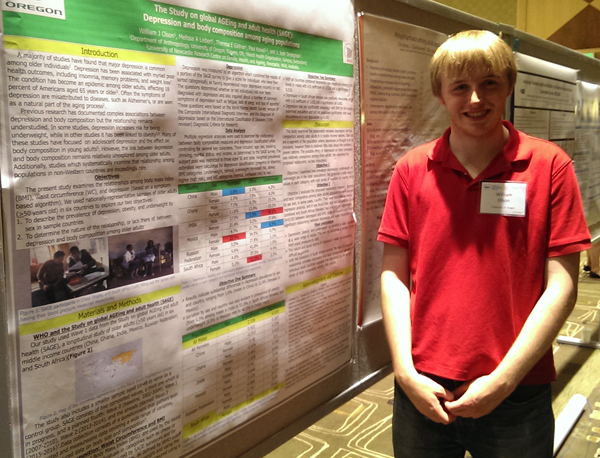
|

The Global
Health Biomarker Laboratory (formerly the Snodgrass
Human Biology Research Laboratory) is co-directed by Dr.
Josh Snodgrass and Dr.
Zachary DuBois, and focuses on the development and
application of minimally invasive techniques (e.g.,
dried blood spots [DBS], saliva, hair, and urine) for
assessing health and physiology in population-based
research.
We have active research projects in the US and Ecuador, and we provide training and technical support for projects in the US (including Oregon and Puerto Rico), Russia/Siberia, Laos, Tunisia, UAE, Cameroon, Kenya, Republic of Congo, Tanzania, and the SAGE countries (China, Ghana, India, Mexico, Russia, and South Africa). Click below to jump to: Location and Resources Research Projects Undergraduate Research Opportunities Community Outreach How to Donate to the Lab Publications Conference Presentations Lab Members 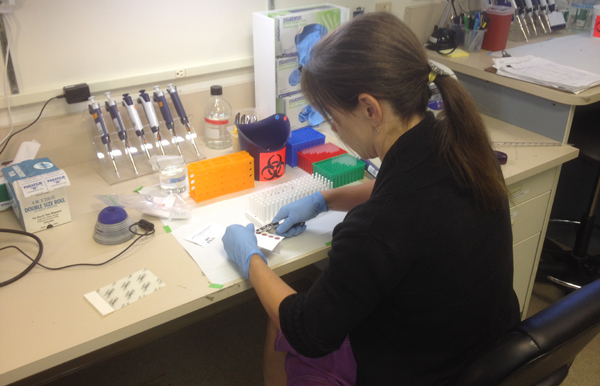 Lab Manager Dr. Geeta Eick preparing
dried blood spot (DBS) samples for analysis of
C-reactive protein (CRP)
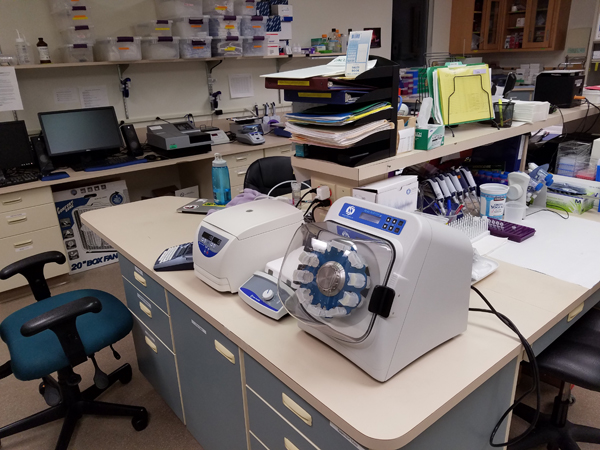 The
Global
Health Biomarker Lab
Location and Resources The Global Health Biomarker Lab is located in Pacific Hall 12 on the UO campus. The lab is an endocrinology and immunology lab that provides equipment that allows for the analysis of hormones and various health markers from human blood, saliva, and urine samples. The lab also provides facilities for data analysis. The lab also houses portable metabolic equipment for studies of human biology, including a MedGraphics VO2000 unit, which allows the measurement of energy expenditure in lab or field conditions. Additional equipment is available for assessment of physical activity (e.g., Actical and Actigraph activity monitors and Polar heart rate monitors), body composition (e.g., bioelectrical impedance analysis instruments), body temperature (Vitalsense telemetric physiological monitoring systems), and cardiovascular/metabolic health (e.g., blood pressure monitors, Cardiochek PA, Cholestech LDX & GDX, and Hemocue instruments). Our primary research in the lab involves the use of biomarkers, such as cortisol, amylase, cytomegalovirus (CMV), and Epstein-Barr virus (EBV) antibodies, to better understand how psychosocial stress contributes to the development and progression of cardiovascular and metabolic diseases. We also use testosterone in our work on life history tradeoffs between reproductive investment and immune function among the Shuar of Ecuador. Further, we work with a number of markers of immune function, including immunoglobulins E and G (IgE and IgG) and the inflammatory markers C-reactive protein (CRP) and interleukin-6 (IL-6). For more information on the types of biomarker analyses performed in the lab click here. This publication also contains information on the biomarkers that can be measured from DBS samples. Building the Methodological Toolkit in Biological Anthropology In 2016, Snodgrass and Eick received an NSF grant from the Biological Anthropology program ("Building the Methodological Toolkit in Biological Anthropology: Dried Blood Spot Methods Development for Addressing Key Evolutionary and Biocultural Questions"; BCS-1638786) to develop and validate dried blood spot biomarkers for myeloperoxidase (pANCA), TPOAb, interleukin-10 (IL-10), carboxylated osteocalcin (cOC), tartrate-resistant acid phosphatase 5b (TRACP5b), and Klotho. Maureen Devlin (University of Michigan), Tara Cepon-Robins (University of Colorado, Colorado Springs), Paul Kowal (WHO and UO), and Larry Sugiyama (UO) are senior personnel on the project. We are currently running a collection project (Eugene 200 Version 2 or E2V2) of 200 matched fingerprick DBS, venous DBS, serum, and plasma samples from 200 people in the Eugene/Springfield area. The project involves graduate students Theresa Gildner and Elisabeth Goldman. The E2V2 project staff includes the following undergraduates: Ali Bedbury, Kailyn Brainard, Lucy Davis, Allison Dona, Eliza Hallett, Jordan Lofton, Tigest Mequanint, Isabel Moore, Lillie Scarth, Maddie Smith. It also involves high school student Eli Ablow Measelle. 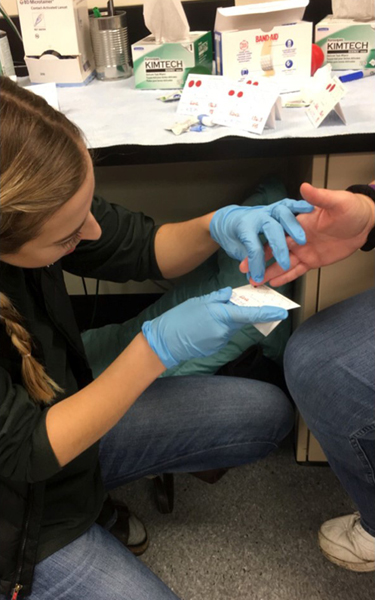 Ali Bedbury collecting a blood spot
as part of E2V2
The Couples Project Since 2007, the lab has been involved with a large-scale collaborative project (Couples) funded primarily by an NIH NICHD R01 grant. The project, which builds on a multi-decade longitudinal project conducted by the Oregon Social Learning Center (OSLC), uses multiple biomarkers to trace the pathways from conflictual and dysfunctional romantic relationships to chronic psychosocial stress to the development and progression of chronic disease. The lab is completing immunoassay analysis of >10,000 biomarker samples (including cortisol, amylase, CRP, and EBV antibodies) from two waves of data collection. A particularly important finding from the research focuses on the effects of intimate partner violence on the dysregulation of cortisol rhythms; this research was published in the journal Psychoneuroendocrinology (Kim et al., 2015).  Stress, discrimination, and health among Latin American immigrants in Oregon The lab has been involved with a collaborative effort with scientists from the UO College of Education's Center for Equity Promotion (Drs. Heather McClure and Charles Martinez) and community partner Farmworker Housing Development Corporation (FHDC) to study various dimensions of discrimination, chronic psychosocial stress, and health among Latino residents (including farmworkers) in Oregon (McClure et al. 2010 a&b, 2013, 2014 a&b, 2015; Squires et al. 2012). The project has been funded by UO, OSLC, and an NIH National Institute on Minority Health and Health Disparities R24 grant. 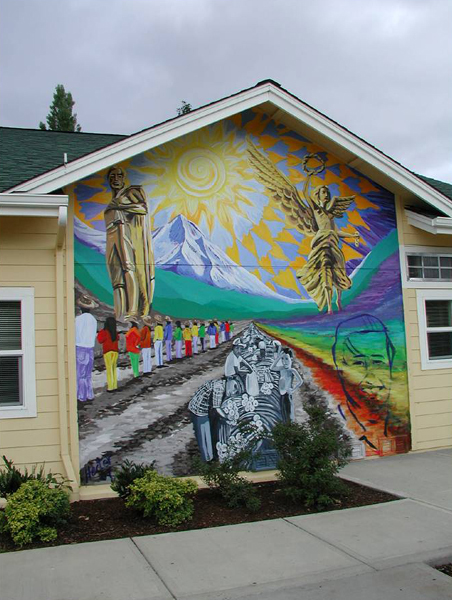 Mural
painted by residents at the Farmworker Housing
Development Corporation
WHO's Study on global AGEing and adult health (SAGE) The Snodgrass Lab plays a key role in the World Health Organization's Study on global AGEing and adult health (SAGE), an ongoing NIH National Institute on Aging funded study that compiles comprehensive longitudinal information on the health and well-being of adult populations (n=~42,000) and the aging process in six countries (China, Ghana, India, Mexico, Russia, and South Africa). The lab supports SAGE's goal of building lab capacity in the study nations by providing coordination and support for labs in the six SAGE countries. In addition, we are actively developing new DBS assays (e.g., apololipoprotein B [apoB]), optimizing others (interleukin-6 [IL-6], CRP, and telomere length [TL]) for application in SAGE, and developing a replacement DBS assay for EBV antibodies (since the validated kit was discontinued; Eick et al. 2016). Click here for additional information on other work pursued by the Eugene office of the SAGE project. 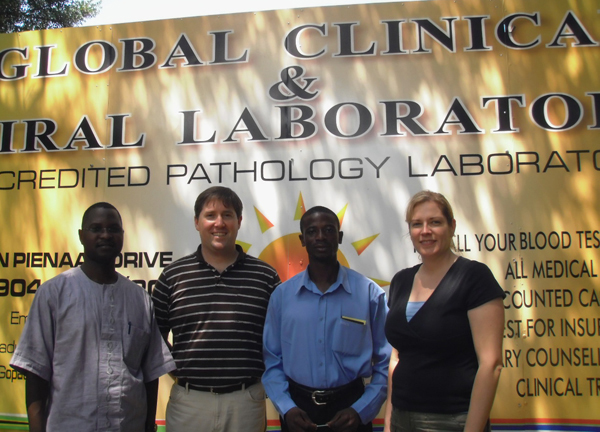 Dr. Snodgrass at a lab
training in South Africa in 2010 as part of
the WHO's SAGE project
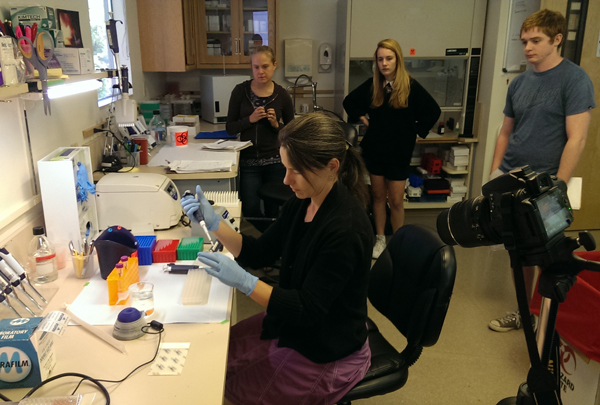 Lab Manager Dr. Geeta Eick
demonstrates an assay step as part of the filming
of a CRP video assay protocol,
which was developed for the WHO's SAGE project; graduate students Melissa Liebert and Elisabeth Goldman, and undergraduate Tyler Fording, watch the process The Shuar Health and Life History Project The lab also supports research by the Shuar Health and Life History Project, a long-term study in Ecuador co-directed by Snodgrass and Dr. Larry Sugiyama that involves several UO graduate students (Theresa Gildner, Chris Harrington, and Josh Schrock), a Harvard graduate student (Heather Shattuck-Heidorn), and a Yale graduate student (Dorsa Amir). Senior personnel on the project include Dr. Rick Bribiescas (Yale), Dr. Tara Cepon-Robins (Colorado-Colorado Springs), Dr. Melissa Liebert (Oregon), Dr. Felicia Madimenos (CUNY-Queens), and Dr. Sam Urlacher (CUNY-Hunter). The Shuar project involves studies of the effects of stress on health that include major lab components. Furthermore, the Snodgrass Lab allows the study of human life history trade-offs in growth and immune function using biomarkers such as C-reactive protein and immunoglobulins E and G. 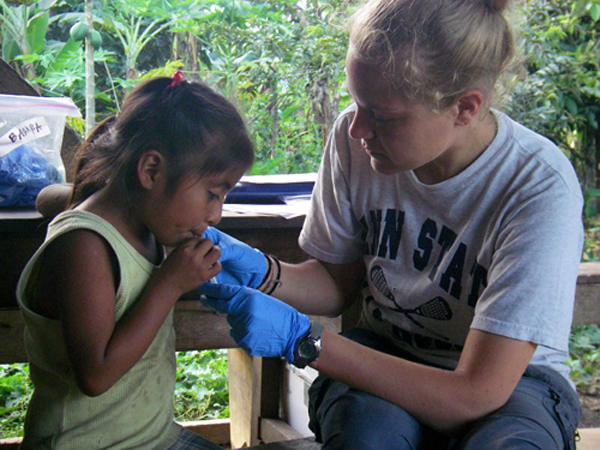 Lab member Melissa Liebert
collecting a salivary cortisol sample from a Shuar
girl as part of her dissertation research
The Indigenous Siberian Health and Adaptation Project The Indigenous Siberian Health and Adaptation Project is an international collaborative research project directed by Snodgrass and Dr. Bill Leonard that focuses on two primary issues related to metabolic adaptation and health change among indigenous Siberians: 1) adaptation to the circumpolar environment, with a focus on evaluating evidence for metabolic adaptation to cold stress; and 2) how social and economic changes among native Siberians influence contemporary population health with an emphasis on cardiovascular and metabolic disease. The project has collected biological samples since 2001 but all analyses since 2007 have been conducted in Russia in collaboration with the Yakutsk Medical Center (Yakutsk, Russia) and the State Scientific Center of Clinical and Experimental Medicine, Siberian Branch of the Russian Academy of Medical Sciences (Novosibirsk, Russia). 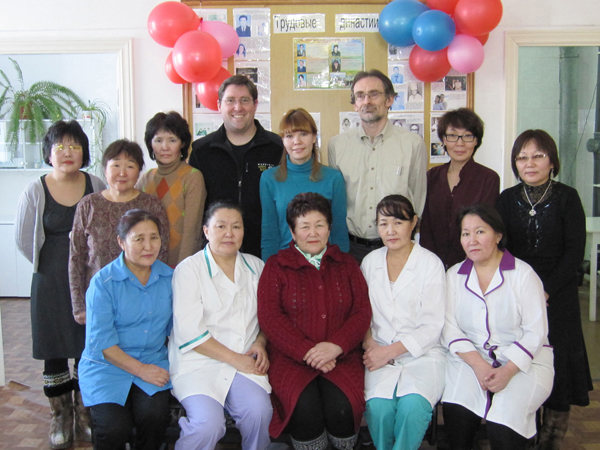 Dr. Josh Snodgrass
and the Indigenous Siberian Health and Adaptation
Project research team in
Berdygestiakh, Sakha Republic/Yakutia (Russia) in January 2011 Non-Human Primate Endocrinology and Sociosexual Behavior The lab supports several nascent research projects on non‐human primates, including a study led by Dr. Frances White and graduate student Klaree Boose that examines links between sociosexual behavior and urinary cortisol and oxytocin among captive bonobos from the Columbus Zoo. The project also involves UO graduate student Colin Brand. 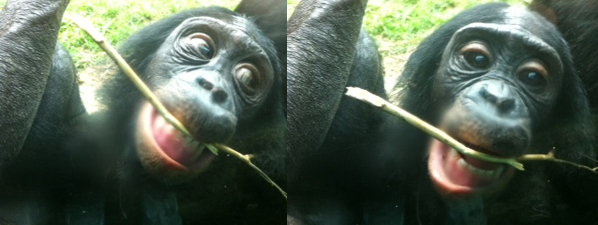 Undergraduate Research Opportunities The Snodgrass Lab creates research opportunities for undergraduates, including through the support of senior theses and other original research projects. This includes students from UO's Clark Honors College including:
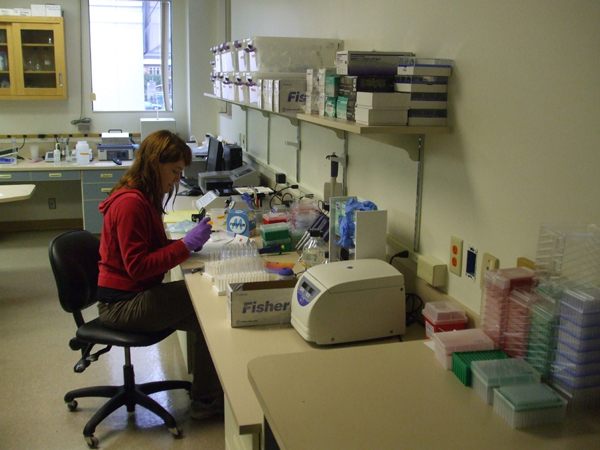 Former undergraduate Heather Shattuck-Faegre running an assay The Snodgrass Lab has regularly supported several community outreach activities, including the annual Huerto de la Familia (The Family Garden) health fair, which serves low income Latino families in the Eugene/Springfield area. Snodgrass co-sponsors this event along with Head Start of Lane County, Volunteers in Medicine, and White Bird Clinic. Starting in March 2014, the Snodgrass Lab developed an intensive training program for volunteers and health care professionals. Working with Huerto and the Holden Leadership Center, we train and mentor approximate 20 UO undergraduate students per year who participate in the project. Since it started in 2011, the program has served >500 community members without access to health care and has included approximately 75 undergraduates and 10 graduate students. 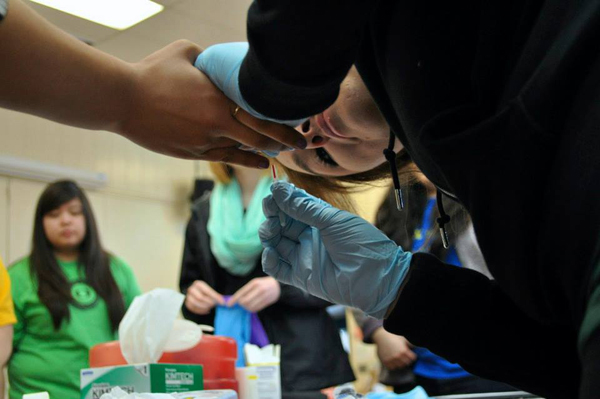 A University of Oregon undergraduate learns how to collect blood from a finger prick in preparation for Huerto de la Familia's annual health fair (Photo by Nicolette Dent)  The 2014 Duck Corps Dia de Salud team after completing training for Huerto de la Familia's annual health fair Donations to the Lab The Snodgrass Lab welcomes gifts from donors to enhance its research activities and its training programs and research opportunities for undergraduate and graduate students. The lab is currently looking for donations for:
If you would like to donate by credit card, please click here to be taken directly to the University Foundation online donation form. Make sure to note that the donation is for the Snodgrass Human Biology Research Laboratory. If you prefer to make a donation by check, mail your check directly to the UO Foundation using the following address. Your check should be made payable to the UO Foundation. University of Oregon FoundationMake sure to reference the Anthropology Department and Snodgrass Human Biology Research Laboratory on the memo line. Selected Lab Publications Urlacher SS, Ellison PT, Sugiyama LS, Pontzer H, Eick G, Liebert MA, Cepon-Robins T, Gildner TE, and Snodgrass JJ. 2018. Tradeoffs between immune function and childhood growth among Amazonian forager-horticulturalists. PNAS. Boose K, White F, Brand A, Meinelt A, and Snodgrass JJ. 2018. Infant handling in bonobos (Pan paniscus): Exploring functional hypotheses and the relationship to oxytocin. Physiology & Behavior. Stagaman K, Cepon-Robins TJ, Liebert MA, Gildner TE, Urlacher SS, Madimenos FC, Guillemin K, Snodgrass JJ, Sugiyama LS, and Bohannan BJM. 2018. Market Integration Predicts Human Gut Microbiome Attributes across a Gradient of Economic Development. mSystems. Goldman EA, Eick GN, Compton D, Kowal P, Snodgrass JJ, Eisenberg DTA, and Sterner KN. 2018. Evaluating minimally invasive sample collection methods for telomere length measurement. Am J Hum Biol 30. Eick GN, Kowal P, Barrett T, Thiele EA, and Snodgrass JJ. 2017. Enzyme-linked immunoassay-based quantitative measurement of apolipoprotein-B (ApoB) in dried blood spots, a biomarker of cardiovascular disease risk. Biodemog Social Bio. Raichlen DA, Pontzer H, Harris J, Mabulla AZP, Marlowe FW, Snodgrass JJ, Eick G, Berbesque JC, Sancilio A, and Wood BM. 2017. Physical activity patterns and biomarkers of cardiovascular disease risk in hunter-gatherers. Am J Hum Biol. Eick G, Urlacher SS, McDade TW, Kowal P, and Snodgrass JJ. 2016. Validation of an optimized ELISA for quantitative assessment of Epstein-Barr virus antibodies from dried blood spots. Biodemog Social Bio 62: 222-233. Brand CM, Boose KJ, Squires EC, Marchant LF, White FJ, Meinelt A, and Snodgrass JJ. 2016. Hair plucking, stress, and urinary cortisol among captive bonobos (Pan paniscus). Zoo Biology 35: 415-422. Blackwell AD, Trumble BC, Suarez IM, Stieglitz J, Beheim B, Snodgrass JJ, Kaplan H, and Gurven M. 2016. Immune function in Amazonian horticulturalists. Ann Hum Biol 43: 382-396. Kim HK, Tiberio SS, Capaldi DM, Shortt JW., Squires EC, and Snodgrass JJ. 2015. Intimate partner violence and diurnal cortisol patterns in couples. Psychoneuroendocrinology 51: 35-46. McClure HH, Snodgrass JJ, Martinez CR, Squires EC, Jimenez RA, Isiordia LE, Eddy JM, and McDade TW. 2015. Stress, place, and allostatic load among Mexican immigrant farmworkers in Oregon. J Immigr Minor Health. McClure HH, Shortt JW, Eddy JM, Holmes A, van Uum S, Russell E, Koren G, Sheeber L, Davis B, Snodgrass JJ, and Martinez CR. 2015. Associations among mother-child contact, parenting stress, and mother and child adjustment related to incarceration. In: J. Poehlmann-Tynan (ed.) Children's Contact with Incarcerated Parents: Implications for Policy and Intervention. Switzerland: Springer International Publishing, pp. 58-82. Liebert MA, Snodgrass JJ, Blackwell AD, Madimenos FC, Cepon TJ, and Sugiyama LS. 2013. Implications of market integration for cardiovascular and metabolic health among an indigenous Amazonian Ecuadorian population. Ann Hum Biol 40: 228-242. McClure HH, Snodgrass JJ, Martinez CR, Eddy JM, McDade TW, Hyers MJ, and Johnstone-Diaz A. 2013. Integrating biomarkers into research with Latino immigrants in the United States. Adv Anthropol 3: 112-120. McDade TW, Tallman PS, Madimenos FC, Liebert MA, Cepon TJ, Sugiyama L, and Snodgrass JJ. 2012. Analysis of variability of high sensitivity C-reactive protein in lowland Ecuador reveals no evidence of chronic low-grade inflammation. Am J Hum Biol 24: 675-681. Squires EC, McClure HH, Martinez CR, Eddy JM, Jimenez RA, Isiordia LE, and Snodgrass JJ. 2012. Diurnal cortisol rhythms among Latino immigrants in Oregon, USA. J Physiol Anthropol 31: 19. Cepon TJ, Snodgrass JJ, Leonard WR, Tarskaia LA, Klimova TM, and Krivoshapkin VG. 2011. The effects of circumpolar adaptation and lifestyle on the development of autoimmune thyroid disorders among the Yakut of Siberia. Am J Hum Biol 23: 703-709. Blackwell AD, Gurven M, Sugiyama LS, Madimenos FC, Liebert MA, Martin MA, Kaplan HS, and Snodgrass JJ. 2011. Evidence for a peak shift in humoral responses to helminths: Age profiles of IgE in the Shuar of Ecuador, the Tsimane of Bolivia, and the U.S. NHANES. PLoS Neglect Trop Dis 5: e1218. Blackwell AD, Snodgrass JJ, Madimenos FC, Sugiyama LS. 2010. Life history, immune function, and intestinal helminths: Trade-offs among immunoglobulin E, C-reactive protein, and growth in an Amazonian population. Am J Hum Biol 22: 836-848. Snodgrass JJ, Leonard WR, Tarskaia LA, et al. 2010. Impaired fasting glucose and the metabolic syndrome among an indigenous Siberian population. Int J Circumpol Health 69: 87-98. McClure HH, Martinez CR, Snodgrass JJ, Eddy JM, Jimenez R, Isiordia L, McDade TW. 2010. Discrimination-related stress, blood pressure, and immune function among Latin American immigrants in Oregon. J Biosoc Sci 42: 433-461. McClure HH, Snodgrass JJ, Martinez CR, Eddy JM, Jimenez RA, Isiordia LE. 2010. Discrimination, psychosocial stress, and health among Latin American immigrants in Oregon. Am J Hum Biol 22: 421-423. McDade TW, Williams SR, Snodgrass JJ. 2007. What a drop can do: Dried blood spots as a minimally-invasive method for integrating biomarkers in population-based research. Demography 44: 899-925. Selected Lab Conference Presentations Bedbury et al. 2018. Associations Between Demography and Fecal Calprotectin Levels of Indigenous Shuar of Ecuadorian Amazonia. Paper presented at the Undergraduate Research Symposium at the annual meeting of the American Association of Physical Anthropologists, Austin, TX. Cepon-Robins et al. 2018. Immune response to soil-transmitted helminths is associated with reduced intestinal inflammation: Preliminary evidence from Amazonian Ecuador. American Journal of Physical Anthropology (Supplement) 66: 44. Gildner et al. 2018. Lifestyle Changes and Immune Function: Associations between Immunoglobulin E Levels and Market Integration among Indigenous Shuar from Amazonian Ecuador. American Journal of Physical Anthropology (Supplement) 66: 98. Boose et al. 2018. Male-immature interactions in bonobos (Pan paniscus) and the relationship to testosterone, male reproductive behavior, and affiliation with mothers. American Journal of Physical Anthropology (Supplement) 66: 32-33. Dona et al. 2018. Inflammation as a Mediator of Depression and Diabetes in the Study on global AGEing and adult health (SAGE). American Journal of Physical Anthropology (Supplement) 66: 70. DeLouize et al. 2018. Population differences in aging-related inflammation are associated with change of central adiposity. American Journal of Physical Anthropology (Supplement) 66: 64. Gildner et al. 2018. Salivary Testosterone and Adiposity among Shuar Men: Body Composition Variation in an Indigenous, Subsistence Population. American Journal of Human Biology DOI 10.1002/ajhb.23110: P9. Eick et al. 2018. Validation of a biomarker of bone resorption in dried blood spots. American Journal of Human Biology DOI 10.1002/ajhb.23110: P67. Liebert et al. 2018. Diurnal cortisol rhythms and helminth infection intensity among the indigenous Shuar of Amazonian Ecuador: examining links between stress activity and immune function in a subsistence-based population. American Journal of Human Biology DOI 10.1002/ajhb.23110: P92. Mequanint et al. 2017. Hair cortisol measurement and relationships with growth among Amazonian Shuar children. Poster presented at the Undergraduate Research Symposium at the annual meeting of the American Association of Physical Anthropologists, New Orleans, LA. Schrock et al. 2017. Preliminary evidence that Ascaris lumbricoides infection is associated with mood. Human Behavior and Evolution Society, Boise, ID. Blackwell et al. 2017. Immune function across the life-span in Amazonian horticulturalists. American Journal of Physical Anthropology (Supplement) 64: 122. Gildner et al. 2017. Associations between testosterone levels and parasite load: Testing life history tradeoffs among indigenous Shuar men from Amazonian Ecuador. American Journal of Physical Anthropology (Supplement) 64: 194. Eick et al. 2017. Expanding the methodological toolkit for dried blood spot samples in human biology research: Best practices and preliminary results for interleukin-10 (IL-10). American Journal of Human Biology DOI 10.1002/ajhb.22974: P98. Hallett et al. 2017. The Shuar Health and Life History Project: Chronic helminth infection is associated with kidney function in an indigenous Ecuadorian forager-horticulturalist population. American Journal of Human Biology DOI 10.1002/ajhb.22974: P79. Hové et al. 2017. Immune modulation during pregnancy in a non-industrialized and high pathogen context. American Journal of Human Biology DOI 10.1002/ajhb.22974: P2. Liebert et al. 2017. Diurnal cortisol rhythms among the indigenous Shuar of Amazonian Ecuador: individual differences by age, sex, and body composition across the lifespan. American Journal of Human Biology DOI 10.1002/ajhb.22974: 28-29. Shattuck-Heidorn et al. 2017. Possible influences of early life on immigrant immune function: CRP in a first-generation Ecuadorian immigrant population. American Journal of Human Biology DOI 10.1002/ajhb.22974: P41. Eick et al. 2016. What a drop can really do: methodological challenges of integrating dried blood spot samples into human biology research. American Journal of Human Biology 28: 276. Eick et al. 2016. Validation of a commercially-available ELISA for apolipoprotein B measurement in dried blood spots. Biomarker Network, Washington, DC. Cepon-Robins et al. 2016. Soil-transmitted helminth infection and immune function: Ascaris lumbricoides, but not Trichuris trichiura, is associated with lower adult-levels of C-reactive protein among the Shuar of Ecuadorian Amazonia. American Journal of Human Biology 28: 271. Hove et al. 2016. Immune modulation by pregnancy in women in a high pathogen environment. Paper presented at the annual meeting of the International Society for Evolution, Medicine & Public Health, Durham, NC. Blackwell et al. 2016. Immune function in Amazonian horticulturalists. International Society for Evolution, Medicine & Public Health, Durham, NC Liebert et al. 2016. Developing cultural consonance models for Shuar children of Amazonian Ecuador. Society for Applied Anthropology, Vancouver, BC, Canada. Liebert et al. 2016. The embodiment of market integration: Modeling cultural consonance among Shuar children of Amazonian Ecuador. American Journal of Physical Anthropology (Supplement) 62: 208-209. Gildner et al. 2016. Diurnal testosterone variation among indigenous Shuar men from Amazonian Ecuador. American Journal of Physical Anthropology (Supplement) 62: 154-155. Goldman et al. 2016. Evaluating minimally invasive methods of telomere length measurement: A sub-study of the WHO Study on Global AGEing and Adult Health (SAGE). American Journal of Physical Anthropology (Supplement) 62: 157. Barrett et al. 2016. The interrelationship of cytomegalovirus and Epstein-Barr virus antibodies among Shuar of Amazonian Ecuador. American Journal of Physical Anthropology (Supplement) 62: 87. Boose et al. 2016. Infant handling and the socioendocrine correlates of allocare behavior in sub-adult bonobos (Pan paniscus). American Journal of Physical Anthropology (Supplement) 62: 100. Urlacher et al 2015. The Shuar Health and Life History Project: Childhood somatic resources, linear growth, and immune function among the Shuar. American Journal of Physical Anthropology (Supplement) 60: 310. Boose et al. 2015. Sexual behavior, stress, and constraint in female choice in bonobos. American Journal of Physical Anthropology (Supplement) 60: 89. Cepon-Robins et al. 2015. The Shuar Health and Life History Project: Testing the Hygiene Hypothesis--Soil-transmitted helminth infection and immune dysregulation among the Shuar of Amazonian Ecuador. American Journal of Physical Anthropology (Supplement) 60: 103. Cepon-Robins et al. 2015. The Indigenous Siberian Health and Adaptation Project: Implications of Epstein-Barr Virus infection for thyroid health and autoimmunity among an indigenous circumpolar population. American Journal of Human Biology 27: 264-265. Leibert et al. 2015. The Shuar Health and Life History Project: Lifestyle incongruity and immune function among the Indigenous Shuar of Amazonian Ecuador. American Journal of Human Biology 27: 273. Liebert et al. 2014. The Shuar Health and Life History Project: The role of market integration and life history trade-offs on diurnal cortisol among Indigenous Shuar children of Amazonian Ecuador (meeting abstract). Am J Hum Biol 26: 270-271. Urlacher et al. 2014. Childhood immune function and growth: Insights from repeat measures among the Amazonian Shuar (meeting abstract). Am J Hum Biol 26: 283-284. (Note: Paper won E.E. Hunt Prize for best graduate student paper presented at the Human Biology Association meeting) Cepon-Robins et al. 2014. The Shuar Health and Life History Project: Chronic and infectious disease burden among the Shuar--The complicated nature of epidemiological transitions (meeting abstract). Am J Hum Biol 26: 261-262. Boose et al. 2014. Urinary oxytocin, sociosexual behavior, and grooming in bonobos (Pan paniscus): Preliminary analyses (meeting abstract). Am J Phys Anthropol (Suppl) 58: 243. Liebert et al. 2013. The Shuar Health and Life History Project: The psychosocial stress response of children from varying degrees of market integration in an indigenous lowland Ecuadorian population (meeting abstract). Am J Hum Biol 25: 264-265. Schweber et al. 2013. The Indigenous Siberian Health and Adaptation Project: Chronic stress and its relation to lifestyle change, Epstein-Barr virus, blood pressure, and C-reactive protein among the Yakut (Sakha) of Siberia (meeting abstract). Am J Hum Biol 25: 273-274. Streeter et al. 2013. The Indigenous Siberian Health and Adaptation Project: Tissue hypoxia, adiponectin dysregulation, and hemoglobin levels among the Yakut (Sakha) of Siberia (meeting abstract). Am J Hum Biol 25: 276-277. Balu et al. 2013. The Indigenous Siberian Health and Adaptation Project: Seasonal variation in autoimmune thyroid disorders among the Yakut (Sakha) of Siberia (meeting abstract). Am J Hum Biol 25: 252. Liebert et al. 2012. The Shuar Health and Life History Project: The relationship between market integration and diurnal salivary cortisol rhythms of children in an indigenous lowland Ecuadorian population (meeting abstract). Am J Hum Biol 24: 232. Snodgrass et al. 2012. Acculturation, chronic psychosocial stress, and health among Latino mother-child pairs in Texas (meeting abstract). Am J Phys Anthropol (Suppl) 54: 274. Ridgeway-Diaz et al. 2011. The Shuar Health and Life History Project: Epstein-Barr virus and market integration in the indigenous Shuar of Ecuadorian Amazonia (meeting abstract). Am J Hum Biol 23: 274. Shattuck-Faegre et al. 2011. The Shuar Health and Life History Project: Immune pathways and Epstein-Barr virus (meeting abstract). Am J Hum Biol 23: 276. Liebert et al. 2011. Immunoglobulin E, C-reactive protein, and cardiovascular and metabolic health among the indigenous Shuar of Ecuador (meeting abstract). Am J Hum Biol 23: 264. (Note: Poster won E.E. Hunt Prize for best student paper presented at the Human Biology Association meeting) Lab Members Director:  Lab Manager:
 Dr. Geeta Eick (Research Scientist) Members:
 Dr. Melissa Liebert
(Postdoc)
Former
Lab Members: Tigest Mequanint (Undergraduate; SCORE program)  Josh Schrock (PhD student) Vimal Balu (BS,
Oregon, 2014)
Tyler Barrett (BS, Oregon, 2015; now in a graduate program in Anthropology at Northwestern University) Aaron Blackwell (PhD, Oregon, 2009; now an Assistant Professor at UC Santa Barbara) Robyn Brigham (BS, Oregon, 2015; ) Tara Cepon-Robins (PhD, Oregon, 2015; now an Assistant Professor at Colorado-Colorado Springs) Devan Compton (BS, Oregon, 2015) Tyler Fording (BS, Oregon, 2016) Lauren Hawkins (BS, Oregon, 2012) Chelsey Iida (BS, Oregon, 2011) Sasha Johnson-Freyd (South Eugene High School graduate 2011) Felicia Madimenos (PhD, Oregon, 2011; now an Assistant Professor at CUNY--Queens College) Erica (Midttveit) Squires (MS, Oregon, 2010) Will Olson (BS, Oregon 2014) Callie Porter (BS, Oregon, 2016) Julia Ridgeway-Diaz (MS, Oregon, 2011; MD, UCSF, 2016) Katie Schweber (BS, Oregon, 2013) Heather Shattuck-Faegre (now in a PhD program at Harvard University) Liz Streeter (BS, Oregon, 2013) Sierra Thompson (BS, Oregon, 2013) Mitch Volpe (BS, Oregon, 2014) Austin Wong (BS, Oregon, 2015) Back to Snodgrass'
Homepage
This site is best viewed with Firefox or Safari. Last updated: 5/19/18 Comments or questions? Contact me. |